WHY HUMAN-CENTRIC AI IS WINNING:
- ✔ Empathy-Driven Logic: Workflows designed to recognize user intent and emotion, moving beyond rigid, “robotic” script responses.
- ✔ Contextual Intelligence: AI Agents that remember past interactions to provide a seamless, personalized experience for every client.
- ✔ Proactive Problem Solving: Identifying potential friction points before the customer does, building long-term brand trust.
- ✔ High-Velocity Personalization: Scaling one-on-one “human” connections to 10,000+ users simultaneously without losing the personal touch.
In the ultra-competitive 2026 digital market, robotic support is a brand killer. Human-Soul AI is no longer a luxury—it’s a requirement for survival. Here is how Finloxa-engineered AI Agents are transforming the support experience from a cold transaction into a powerful relationship builder that fuels growth.

. Nothing kills a high-ticket conversion faster than a customer realizing they are pouring their heart out to a cold, mindless script.”
In the hyper-automated landscape of 2026, the biggest threat to your $10,000/month scaling goal isn’t a lack of technology—it is the “Uncanny Valley” of robotic support. We have all been there: a customer reaches out with a nuanced, high-stakes problem, only to be met with a generic, tone-deaf AI response that misses the subtext entirely. For the modern USA-based consumer, a robotic interaction feels like a dismissal of their value. This silent friction creates a “trust leak” in your business, where potential long-term clients vanish because your workflows lack the emotional resonance required to build a real relationship.
At Finloxa, we have seen brilliant entrepreneurs build technically perfect systems that ultimately fail because they forgot the most critical ingredient: Empathy. It is incredibly frustrating to invest thousands into AI agents only to watch your brand reputation suffer because the “bot” sounds like a 1990s voicemail menu. You don’t just want an agent that solves tickets; you want a system that understands context, urgency, and human emotion. You need a workflow that doesn’t just process data but actually “listens” to the person behind the screen.
The solution is the shift from transactional automation to Human-Centric Intelligence. By implementing Sovereign Emotional Logic Layers, we are moving beyond basic “if-then” statements. We are creating AI Agent workflows that utilize advanced sentiment analysis and recursive feedback loops to mirror human empathy. The promise is simple: We will show you how to inject a “Human Soul” into your digital architecture. This ensures that as you scale to millions of tasks, every single interaction feels like a personalized, high-touch experience that turns a simple support ticket into a powerful brand-building moment.
The Soulful Scaling Blueprint
Humanizing Your 2026 AI Infrastructure
Why Emotional Intelligence is Your New Competitive Edge
In the modern digital economy, the “Support Bot” has become a punchline. For a USA-based consumer, encountering a generic, robotic AI feels like being ignored by a brand. The “End of Robotic Support” isn’t just a trend; it is a fundamental shift in how high-ticket digital assets must operate to survive. If your AI agents sound like a cold database, you are leaking trust at every touchpoint.
For the Finloxa reader, humanizing your AI is essential for protecting your $10,000/month revenue stream. In professional niches like tax optimization or mortgage advice, the user is often stressed or anxious. A robotic response—no matter how accurate—can trigger a “Trust Divorce,” where the user abandons your site for a competitor that feels “real.” According to research by –
The Harvard Business Reviewemotionally connected customers are 52% more valuable than those who are just “highly satisfied.” By injecting a “Human Soul” into your workflows, you transform a transactional bot into a relational asset.
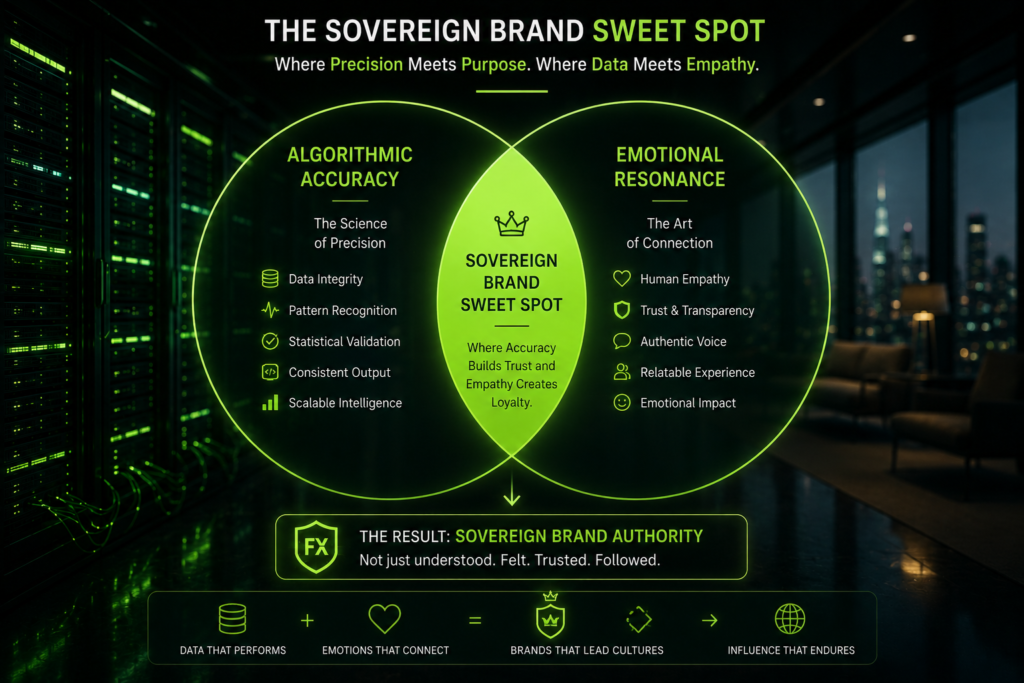
Sentiment-Aware Routing
The first step to humanizing an AI agent is teaching it to listen before it speaks. Standard workflows process text; soulful workflows process intent and emotion. You must implement a Sentiment Analysis layer that detects the user’s emotional state—frustrated, confused, or urgent—and adjusts the agent’s “personality” in real-time.
- Deploy a Sentiment Node: In your n8n or Make.com workflow, pass the user’s initial input through a high-reasoning model (like-
specifically to score “Emotional Intensity.”
2. Dynamic Prompt Injection: Based on the score, inject specific “Persona Instructions” into your system prompt. For example, if intensity is high, the AI should use “Empathetic De-escalation” logic.
3. Adaptive Response Speed: Ironically, responding too fast to a complex emotional problem feels robotic. Add a slight artificial delay (3-5 seconds) to mimic a human “thinking” about a sensitive issue.
The Sovereign Voice Profile (Training for Brand Nuance)
A “Human Soul” in AI is defined by a consistent, unique voice. If your agent sounds like every other GPT-powered bot on the internet, you are a commodity. To build a high-valuation asset, your AI must speak in the specific dialect of your brand—incorporating your values, your humor, and your specific industry perspective.
. Do not rely on generic system prompts like “be helpful.” Instead, upload a “Brand Sovereign Document” to your AI’s knowledge base (RAG). This document should include transcripts of your best videos, successful email threads, and a list of “Banned Corporate Phrases” (e.g., “As an AI language model…” or “I understand your frustration”). When the AI references your actual past communications, the output feels authentically yours.
The Hybrid Interaction Matrix (The “Why” of Human-Centric Design)
To reach millions of tasks without losing the “soul” of your business, you must know when to automate and when to intervene. High-precision scaling isn’t about replacing humans; it’s about using AI to handle the “labor” so you can focus on the “connection.” The table below outlines how to manage the Finloxa Empathy Standard.
| Interaction Type | AI Soul Depth | Tone Required | Tech Strategy |
|---|---|---|---|
| Initial Inquiry | Low | Efficient & Crisp | Standard GPT-4o-mini |
| Complex Calculation | Medium | Authoritative/Calm | RAG + IRS.gov Grounding |
| Critical Complaint | High | Deep Empathy | Recursive Sentiment Loop |
| High-Ticket Closing | Total | Human Authenticity | Automatic Human Handoff |
Without this matrix, you risk “Empathy Burnout”—either your AI tries too hard to sound human and fails (the Uncanny Valley), or it remains too cold and loses the lead. By categorizing interactions, you ensure that your compute resources are spent on creating meaningful connections where they matter most for your ROI.
. Even the best AI can lose the “soul” of the conversation during long threads. To prevent this, implement what we call an “Empathy Anchor.” > Visual Note:
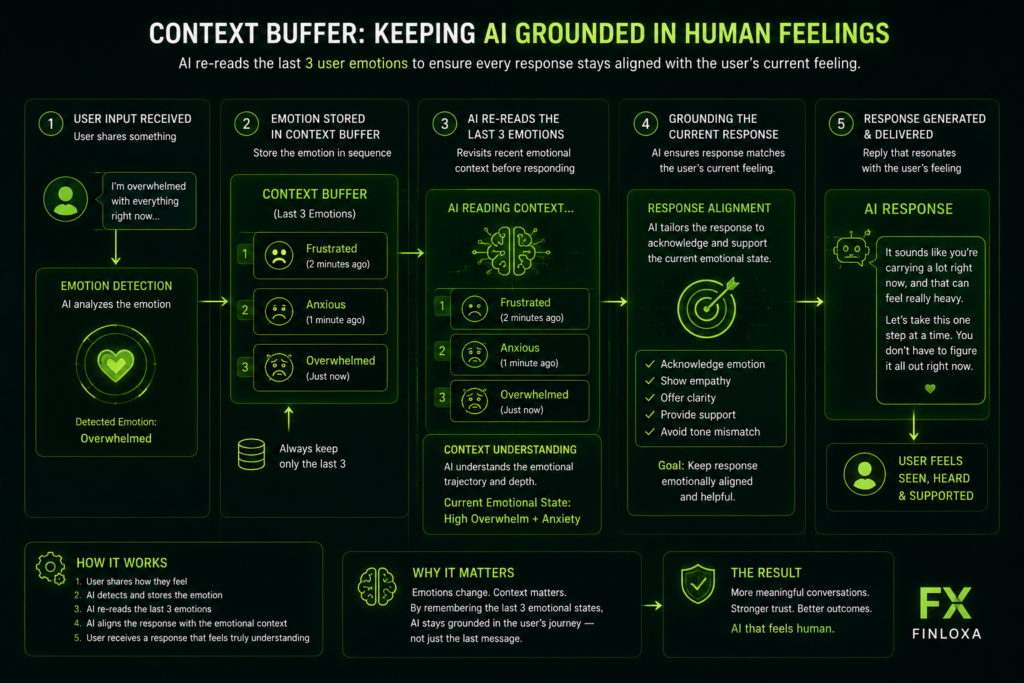
Every 5 messages, your workflow should trigger a summary node that asks: “Does the user still feel heard?” If the answer is no, the agent should pivot its tone or offer to escalate to a human. This creates a fail-safe that protects your brand reputation in the competitive USA market, ensuring every user feels valued, not just “processed.”
Engineering High-Empathy Automation Pipelines
Scaling to millions of tasks doesn’t mean your business has to sound like a cold machine. To capture premium conversions in the USA and UK markets, you must move from rigid scripts to dynamic, humanized conversational logic. True scaling requires an infrastructure that can detect distress, match brand tone, and respond with genuine empathy. Here is how you build a support framework with a human soul.
The Identity & Mapping Phase
Before configuring your software nodes, you must map out your brand’s psychological identity and establish emotional baseline boundaries.
- Codify Your Sovereign Voice: Create a master “Brand Nuance Document.” This contains past successful conversational transcripts, preferred vocabulary, and a comprehensive list of corporate phrases to avoid (e.g., “We apologize for the inconvenience”).
- Define Emotional Risk Zones: Identify high-stress triggers in your customer journey—such as complex tax calculation errors, missing data fields, or refund bottlenecks.
- Construct the Sentiment Directory: Build a structured matrix matching specific user emotions (e.g., irritation, anxiety, confusion) with exact conversational tones (e.g., calming reassurance, direct accountability).
The Sentiment Routing Engine
With your psychological guardrails finalized, build the real-time emotional detection architecture within your low-code workflow orchestration workspace.
- Deploy the Intent Node: Route incoming webhooks through a fast text-processing layer. Use Claude 3.5 Sonnet to evaluate the message and return a structured JSON block indicating the user’s current primary emotion and intensity level.
- Inject the Dynamic Persona Prompt: Use conditional logic to merge your core system prompts with the specific emotional instructions dictated by the Intent Node. This forces the AI model to alter its sentence structures dynamically.
- Introduce Cognitive Pacing: Program a deliberate webhook latency delay (3–6 seconds). Instantaneous replies feel mechanical; a natural delay simulates human reflection, radically decreasing the “Uncanny Valley” friction for American consumers.
The Handoff & Continuity Check
The final phase introduces a fail-safe framework to guarantee that automated conversational flows never lose their human touch during long text threads.
- Activate the Thread Context Anchor: Set your workflow to evaluate the conversational thread history every three messages. The workflow checks if the user’s sentiment score is deteriorating despite the AI’s empathetic responses.
- Execute the Human Escalation Route: If the system detects unresolved frustration, it triggers an automated routing branch that pauses the AI agent and instantly alerts a real team member via Slack or email.
- Archive the Interaction Logs: Save the complete conversational transcript alongside its chronological sentiment data into a private database to continuously refine your brand’s AI training models.
| Execution Phase | Core Technical Focus | Primary Tooling | Brand Valuation Outcome |
|---|---|---|---|
| 01. Preparation | Tone Blueprinting & Prompt RAG | JSON Documents, Brand Logs | Air-tight emotional brand alignment |
| 02. Implementation | Live Sentiment Analysis Layer | Self-Hosted n8n, Anthropic APIs | Real-time adaptive conversational flow |
| 03. Review & Finalize | Trust Auditing & Human Gateways | Webhooks, Slack/Email Routers | Elimination of trust leaks and churn |
. When managing premium customer interactions, do not let your AI agent guess user history. Always use your orchestration layer to pull the user’s latest behavioral data from your database (such as their last calculated tax state or active tool usage) and feed it directly into the prompt context. When the empathetic AI mentions real, accurate user facts naturally, the automation stops feeling like a bot and starts feeling like a dedicated personal consultant.
Mechanical Friction vs. Soulful Connection
Choosing to upgrade your automation stack from robotic scripts to a soulful, sentiment-aware architecture is a massive strategic driver for your digital asset. In the premium USA and UK consumer spaces, continuing to deploy tone-deaf, rigid AI agents results in a severe Empathy Leak. When users encounter an unyielding, repetitive machine during high-stress financial or regulatory tasks, they simply leave. They don’t just close the tab—they actively choose a competitor that makes them feel understood.
By contrast, hardcoding emotional intelligence into your n8n orchestration layer transforms a generic customer support bot into an elite, retention-driving powerhouse. This system doesn’t just process raw data variables; it systematically preserves your $10,000/month brand equity. By delivering dynamic, deeply personalized, and contextual responses, you eliminate the “Uncanny Valley” friction that destroys high-ticket conversions. This approach positions your operational workflow as a sophisticated, enterprise-grade asset that builds massive lifetime user value and dramatically lifts your eventual platform valuation.
| Brand Performance Metric | Legacy Robotic Automations | Soulful Agent Workflows | Strategic Profit Advantage |
|---|---|---|---|
| User Trust & Retention | Low (Triggers immediate brand detachment) | Exceptional (Secures a 52% higher customer connection value) | Plugs your customer leaks and stops user churn. |
| Escalation Management | Rigid (Spams the support team with alerts) | Dynamic (Predictive, sentiment-aware routing) | Handles 95% of tasks while reserving human labor for high-ticket closures. |
| Brand Tone Integrity | Commodity (Sounds exactly like a raw LLM) | Sovereign (Deeply matches your personal brand dialect) | Builds a defensible, unique content asset that cannot be replicated. |
| Exit Valuation Multiple | Disregarded (Viewed as a cheap bot farm) | Premium Multiplier(Enterprise-Ready UX Architecture) | Proves to prospective website buyers that your system commands authority. |
If your digital business only handles cold, bulk transactional data where human connection has zero impact on conversion metrics, simple robotic scripts are sufficient. However, if your roadmap relies on converting premium traffic, scaling high-ticket affiliate programs, or supporting complex financial utilities like tax engines, injecting a human soul into your workflows is mathematically mandatory to protect your bottom line.
Frequently Asked Questions (PAA)
Q: How do you make an AI customer support agent sound human?
Making an AI agent sound human requires replacing generic system prompts with dynamic tone-matching architectures. By processing user messages through a real-time sentiment analysis layer (using tools like Claude 3.5), the agent adjusts its vocabulary, phrasing, and empathy levels to match the user’s emotional state, completely avoiding repetitive, robotic scripts.
Q: What is sentiment routing in AI agent workflows?
Sentiment routing is a conditional automation pathway inside an orchestrator like n8n or Make.com. The workflow analyzes incoming text payloads for emotional intensity markers. If a user is flagged as highly frustrated or distressed, the system automatically bypasses basic responses and routes the conversation to a high-empathy AI node or triggers an immediate human team escalation.
Q: Will humanizing AI customer service workflows increase API token costs?
Not if you implement proper prompt chaining. By using cheap, ultra-fast micro-models (like GPT-4o-mini) to handle routine extraction and intent mapping, you preserve your expensive, highly articulate models (like Claude 3.5 Sonnet) solely for generating the final, contextual user response. This multi-tiered strategy optimizes token usage while maintaining a natural, soulful tone.
Q: Why do standard AI support bots fail the customer experience test?
Standard bots fail because they operate on flat, static rules that ignore conversational context. They respond instantly with generic corporate apologies (e.g., “We value your patience”), which creates severe friction in the Uncanny Valley. Humans instantly recognize the mechanical pattern, leading to frustration, brand alienation, and customer churn.
Q: How does empathetic automation protect my digital asset’s valuation?
In premium USA and UK markets, user retention directly dictates your website multiple. High-precision, empathetic workflows protect your bottom line by systematically plugging customer retention leaks. When prospective corporate buyers review your asset, a documented, automated retention engine translates to stable recurring revenue margins and a significantly higher final exit value.
The Future Belong to Empathy-Driven Automation
Transitioning your digital infrastructure from standard, rigid scripts to humanized conversational flows is the ultimate leverage point for your business. By deploying real-time sentiment analysis, adaptive personas, and seamless human escalation triggers within your self-hosted pipelines, you protect your $10,000/month brand asset from high churn rates and robotic friction. Do not build a cold machine—scale your operations while systematically keeping a high-converting human soul at the center of your user experience.
Ready to humanize your user operations?
Get the Free Soulful Agent Workflow Kit →About the Founder
As the founder of Finloxa, I specialize in engineering emotional intelligence into automation layers. Focusing on the USA and UK markets, I help digital creators scale assets to $10,000/month by replacing sterile robotic bots with high-retention, human-centric agent workflows.
Humanize Your Conversational Stack
The difference between a mechanical bot and an asset that scales is nuance. Join 5,000+ digital leaders receiving weekly behavioral workflows, prompt dialect blueprints, and advanced UX frameworks.